

The Balanced Scorecard
Strategy Simulation
Simulation Overview
In the Harvard strategy simulation “The Balanced Scorecard,” teams work over 8 rounds to implement and adjust a strategic plan aimed at maximizing firm value before a private investor buyout.
Players

Single Player
Languages

English
Simulation Time

Total Time: 2 hours
Intro 10 minutes, Gameplay 1 hour, Debrief 50 minutes
Accessibility

No Accessibility Compliance
Price

$168 per person
Simulation Categories

The Story
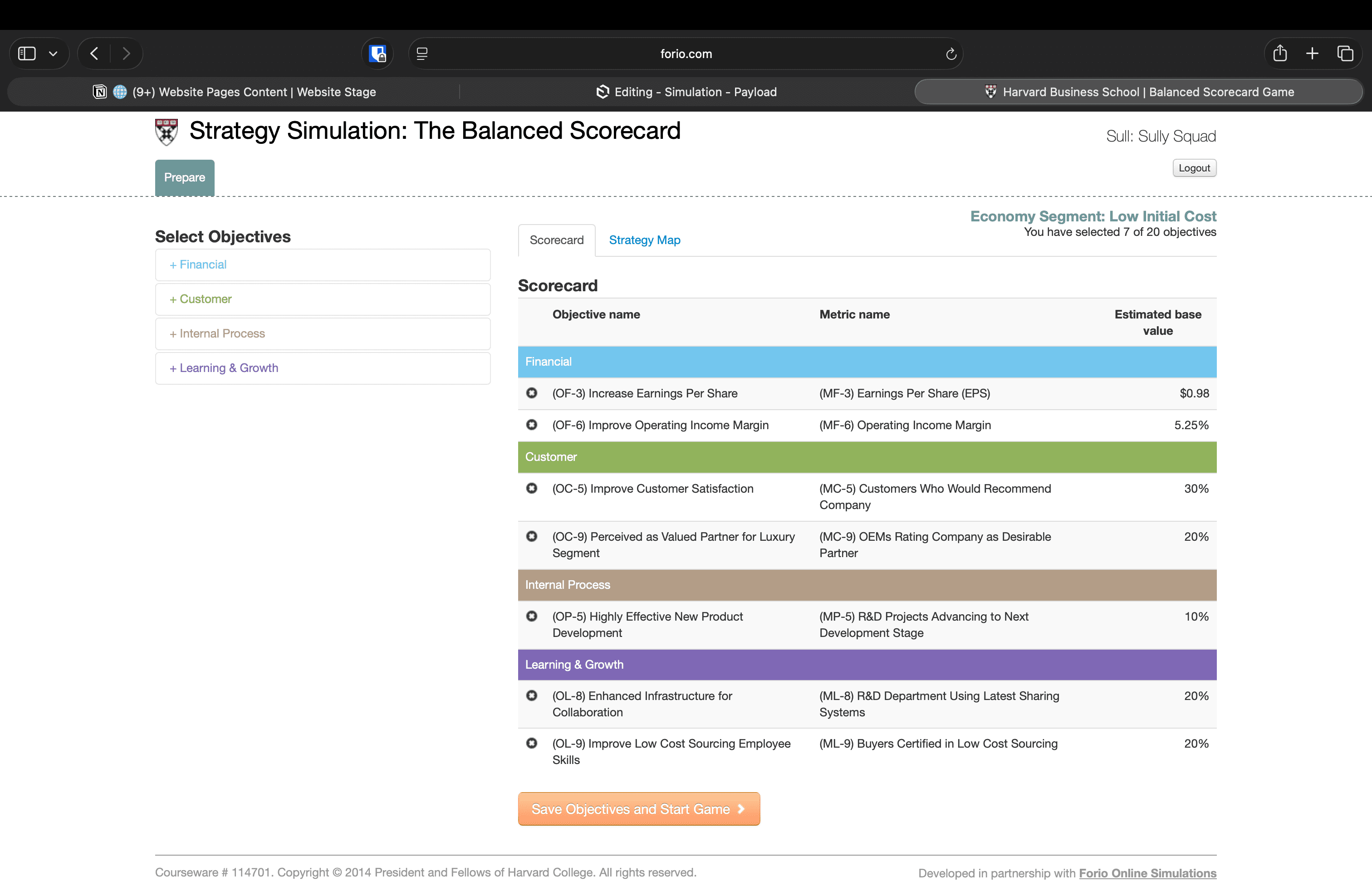
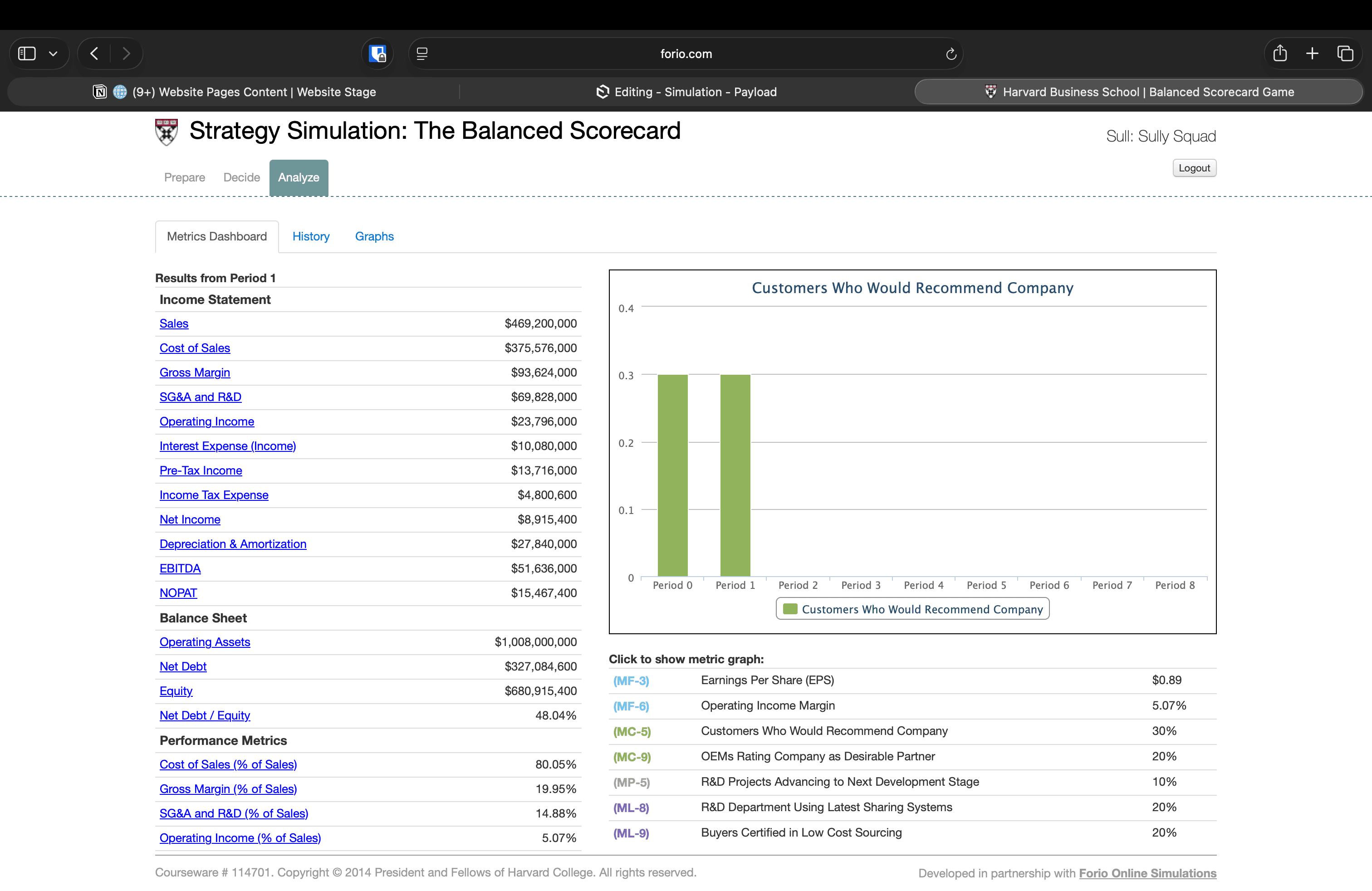
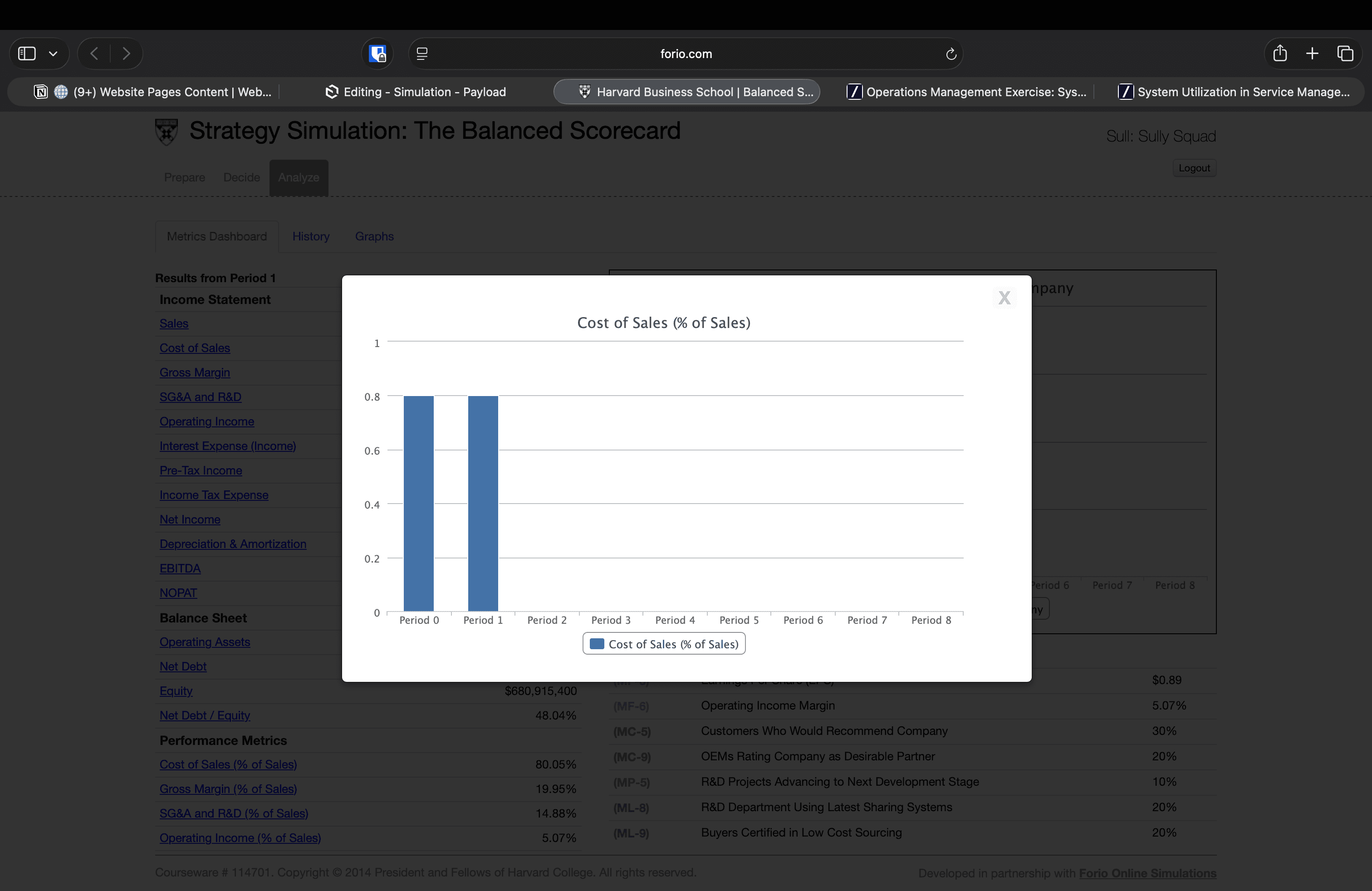
This immersive, multi-player simulation enables teams to apply the balanced scorecard as a practical tool for strategy execution and performance management. Participants work in small teams to define a strategic direction, build a strategy map, design a balanced scorecard, and select initiatives that bring their strategy to life. Over eight decision rounds, teams review real-time scorecard feedback and refine their approach to improve organizational results.
The simulation culminates in a private-equity buyout, where each company’s valuation reflects its financial strength and future potential—reinforcing the connection between strategic alignment and enterprise value. While optimized for team-based learning, the experience can also be run in single-player mode. Facilitators may incorporate practice rounds or assign select teams to a control group to illustrate the impact of different strategic choices.
A comprehensive debrief provides performance analytics and visual summaries, enabling leaders to highlight best practices, compare outcomes, and drive meaningful reflection. This simulation provides corporate teams with a hands-on, high-impact way to internalize balanced scorecard thinking and strengthen their strategic execution capabilities.
Core Competencies
Measurement and Analysis
Analysis and Business Acumen
Strategic Decision Making
Organizational Transformation
Building Strong Teams
Learning Objectives
Resources to Power Your Simulation
Each simulation comes with a Facilitation Guide along with 1:1 facilitator training and free trials.
Available with this simulation
Facilitation Guide

Debrief Slides
Intro Slides
Author Video
Free Trial & Demo
Check Out Similar Forio Sims
Finance and Accounting
Econland
Lead a virtual economy as head of state—make fiscal and monetary policy decisions, balance competing goals, and navigate global uncertainty to drive long-term economic growth and stability.
Check It Out
Finance and Accounting
Working Capital Simulation

Manage a growing company’s cash flow by adjusting credit, collections, and inventory policies. Balance liquidity, profitability, and customer satisfaction while navigating shifting market conditions and operational constraints.
Check It Out
Leadership and Teamwork
Leading Teams That Deliver

Lead with impact. In this simulation, learners guide a team toward high performance—setting clear goals, fostering trust, and inspiring collaboration to achieve meaningful results.
Check It Out