
The Beer Game
MIT Supply Chain Management Simulation
Simulation Overview
Developed in partnership with MIT professor John Sterman, The Beer Game is one of the most widely used supply chain management simulations. Play one of four positions in a dynamic supply chain for beer distribution as you and your colleagues manage the incoming and outgoing supply.
Each role can influence the entire chain by ordering too much or too little. Often called the “bullwhip effect,” this error can worsen shortages and overstock and wreak havoc on supply chains.
When things go wrong, we often look for scapegoats. The Beer Game simulation addresses the often erroneous, negative attributions we make about others, how they erode trust in organizations, and what can be done to overcome these self-reinforcing beliefs. It’s not bad apples, it’s bad barrels.
Players

Multiplayer
Languages

English
Simulation Time

Total Time: 1.75-2.75 hours
Intro 15 minutes, Gameplay 1-1.5 hours, Debrief 30-60 minutes
Accessibility

WCAG 2.0 Compliance
Price

$168 per person
Simulation Categories

The Story
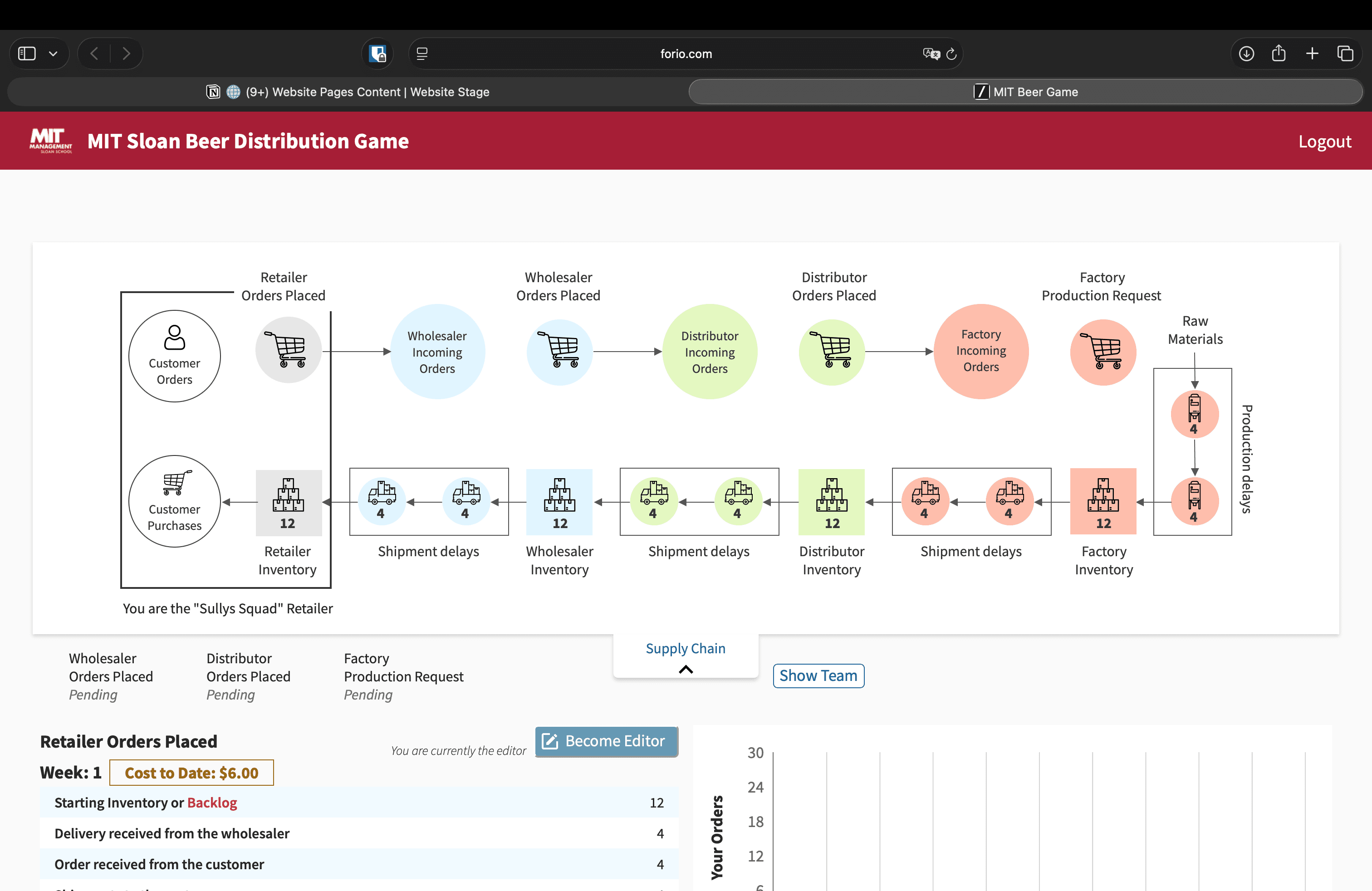
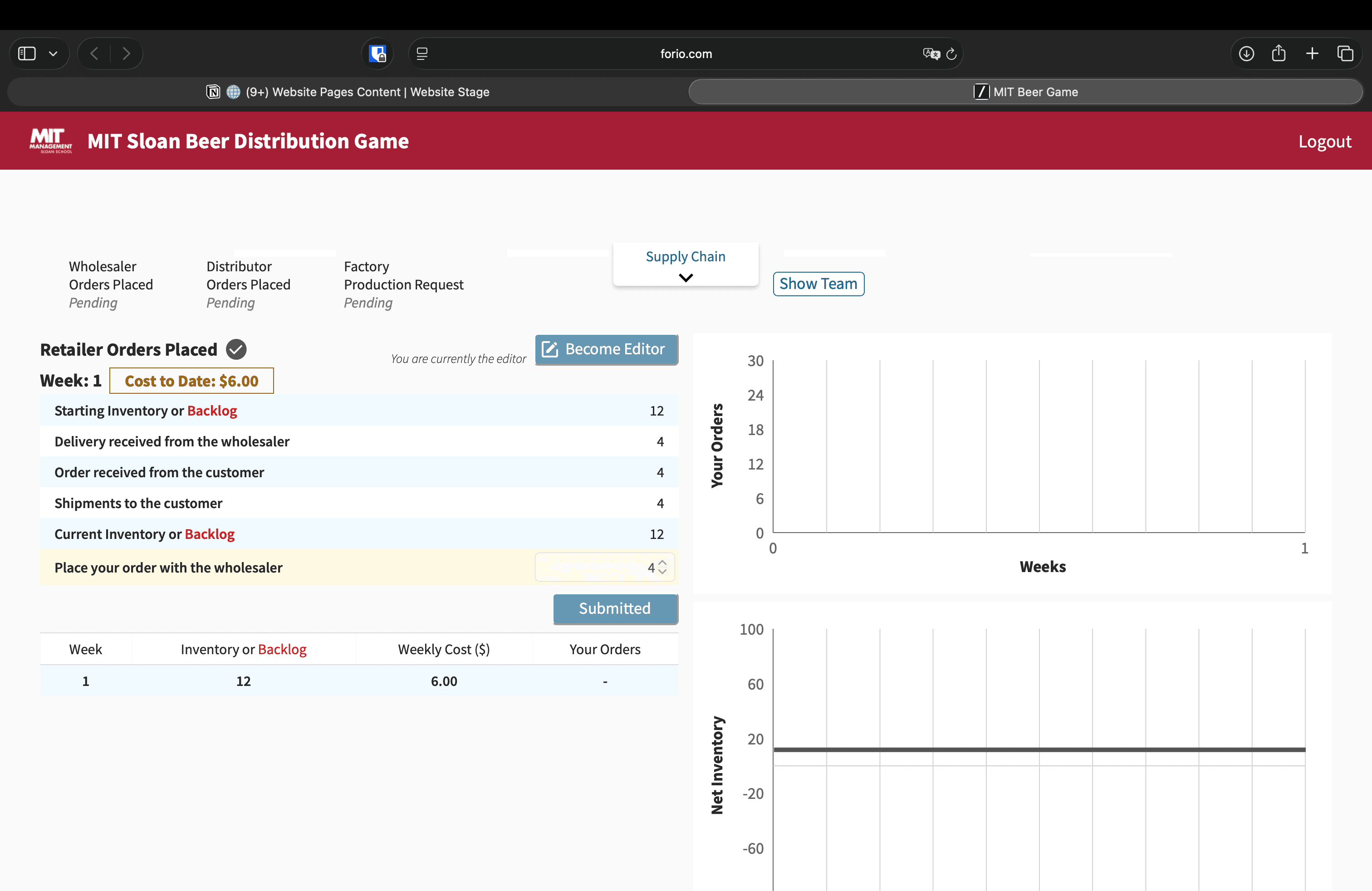
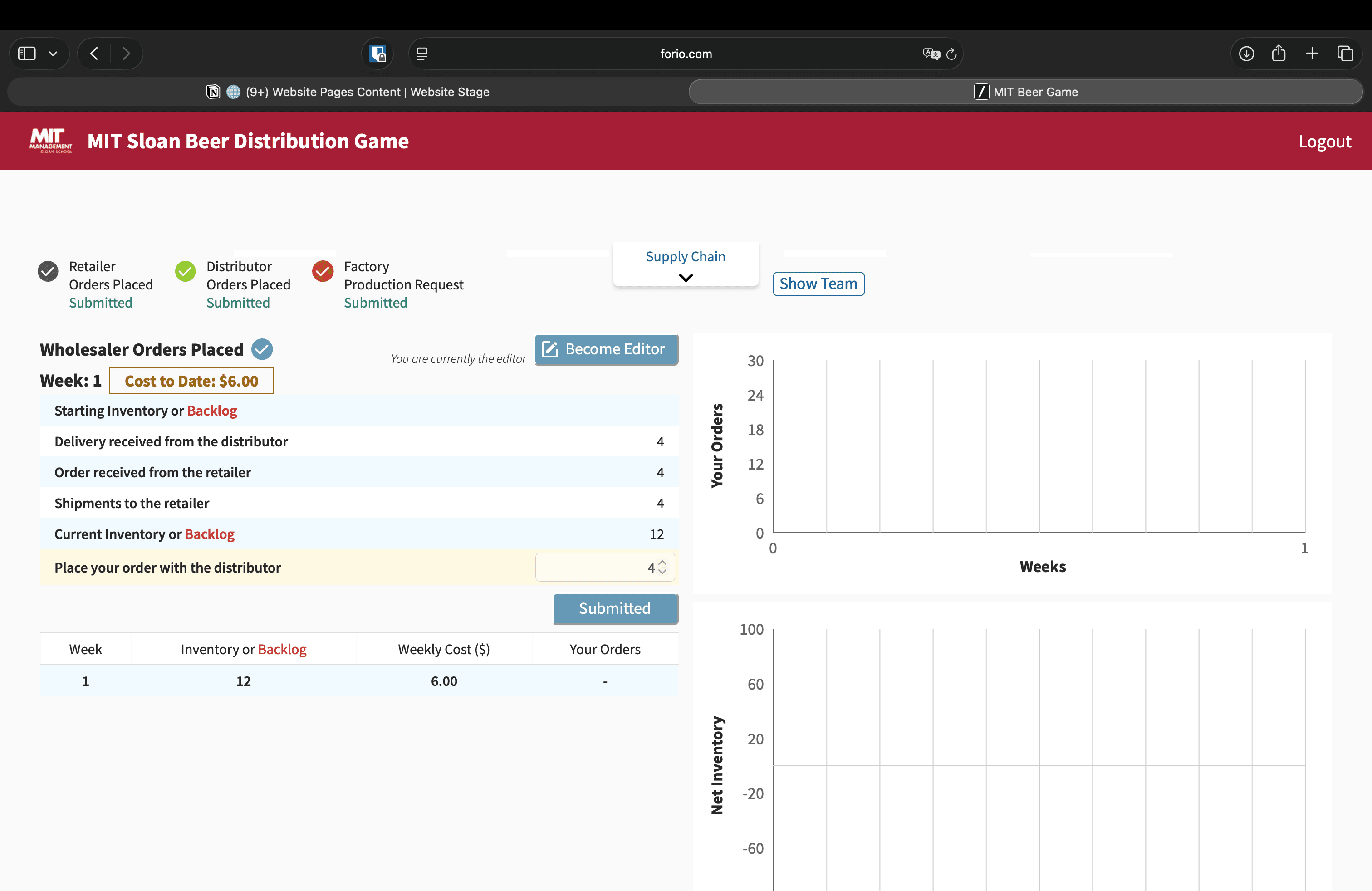
At Sloan Lager Brewing Co., demand is booming. Customers are thirsty, the product is beloved, and the team is confident. But behind the scenes, the supply chain is far from stable. Small missteps ripple unpredictably from retailer to wholesaler to distributor to factory—creating shortages, backlogs, stockpiles, and frustration.
Participants step into one of these four roles—Retailer, Wholesaler, Distributor, or Factory—within a beer supply chain and must make weekly ordering decisions with limited information, strict communication boundaries, and rising time pressure.
No one can see end-customer demand except the retailer. No one can coordinate across roles. Every player is trying their best, but as the game unfolds, orders begin to spike, inventory swings wildly, and team chat fills with disbelief, blame, humor, and stress.
As the tension builds, participants begin forming theories about what must be happening at the customer end—most concluding there must be chaotic demand swings.
By the end, participants see clearly why complex systems routinely exhibit boom-and-bust cycles, massive amplification, finger-pointing, and costly coordination failures—insights they can immediately apply to real supply chain, organizational, and leadership challenges.
Core Competencies
Supply Chain Management
Systems Thinking
Decision Making Under Pressure
Learning Objectives
Resources to Power Your Simulation
This simulation comes with a Facilitation Guide along with 1:1 facilitator training and free trial accounts.
Available with this simulation
Facilitation Guide

Free Trial & Demo