

The Negotiator's Dilemma
Strategy Simulation
Simulation Overview
The Negotiator’s Dilemma describes the core tension negotiators face between creating value through cooperation and claiming value through competition. In the simulation, players repeatedly choose whether to cooperate or compete in a multi-round prisoner’s dilemma, where mutual cooperation yields collective gains but each individual is also tempted to defect for personal advantage.
Players

Multiplayer
Languages

English
Simulation Time

Total Time: 1-1.25 hours
Intro 15 minutes, Gameplay 15-30 minutes, Debrief 30 minutes
Accessibility

WCAG 2.1 Compliance
Price

$168 per person
Simulation Categories

The Story
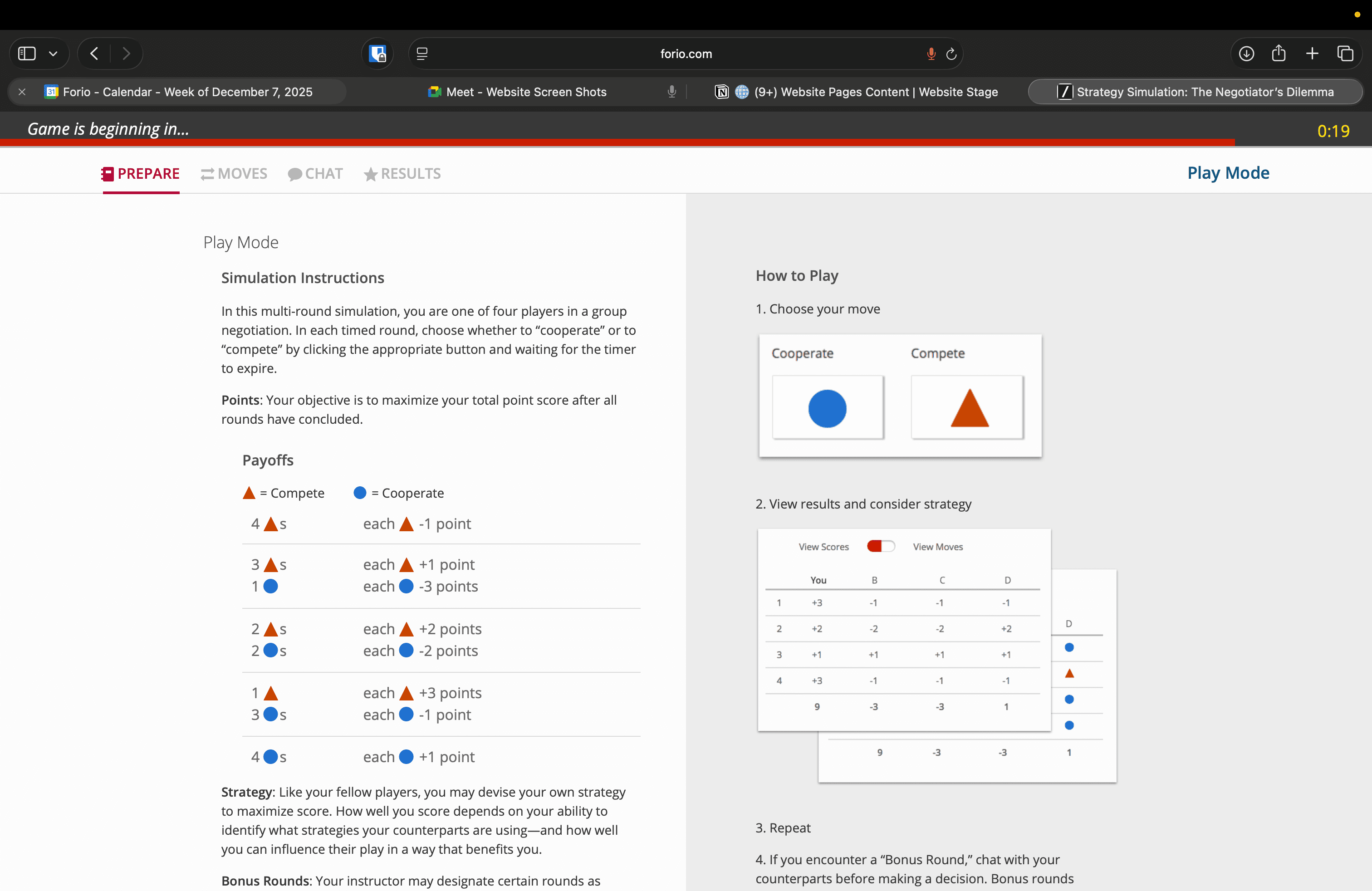
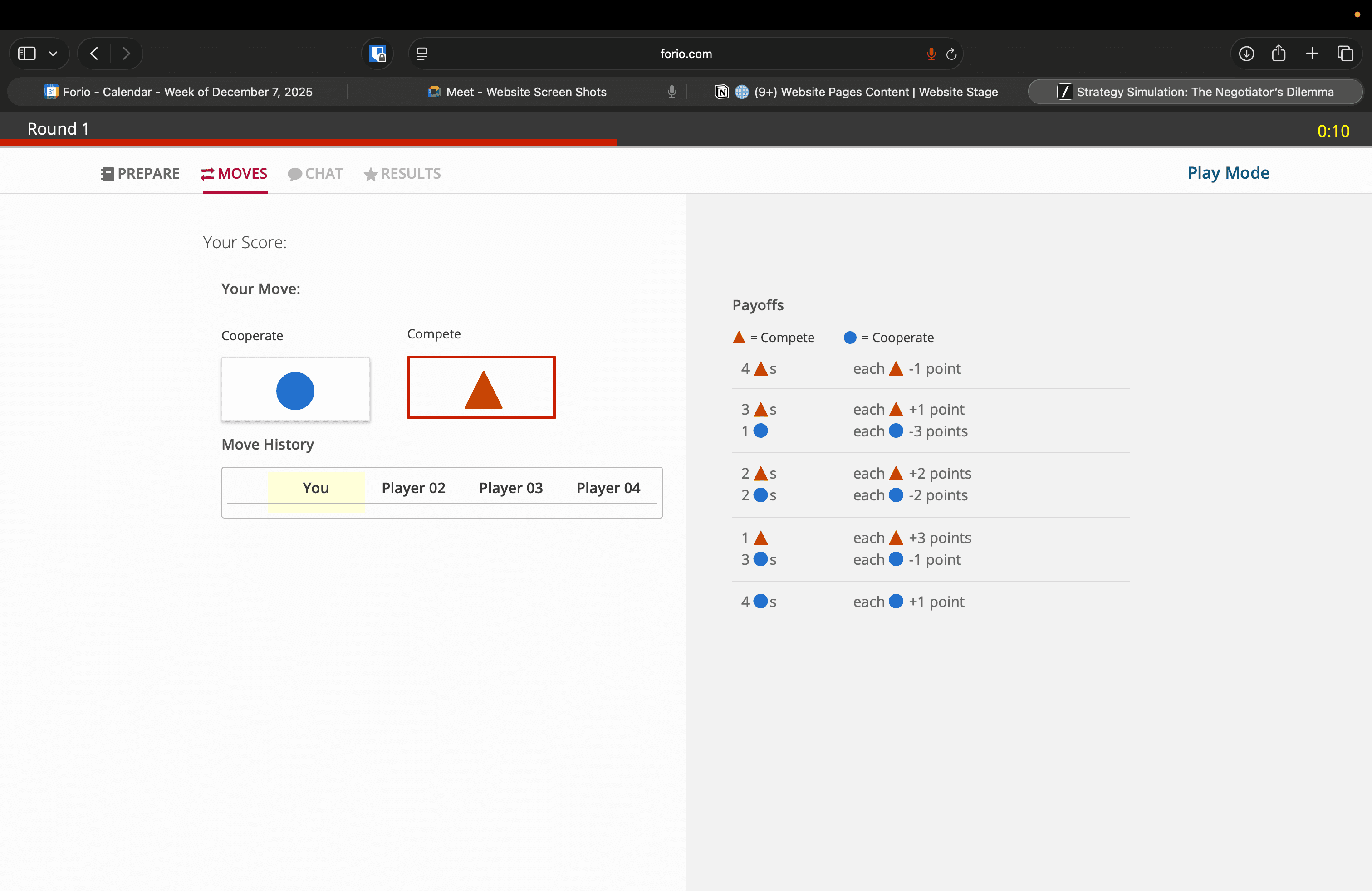
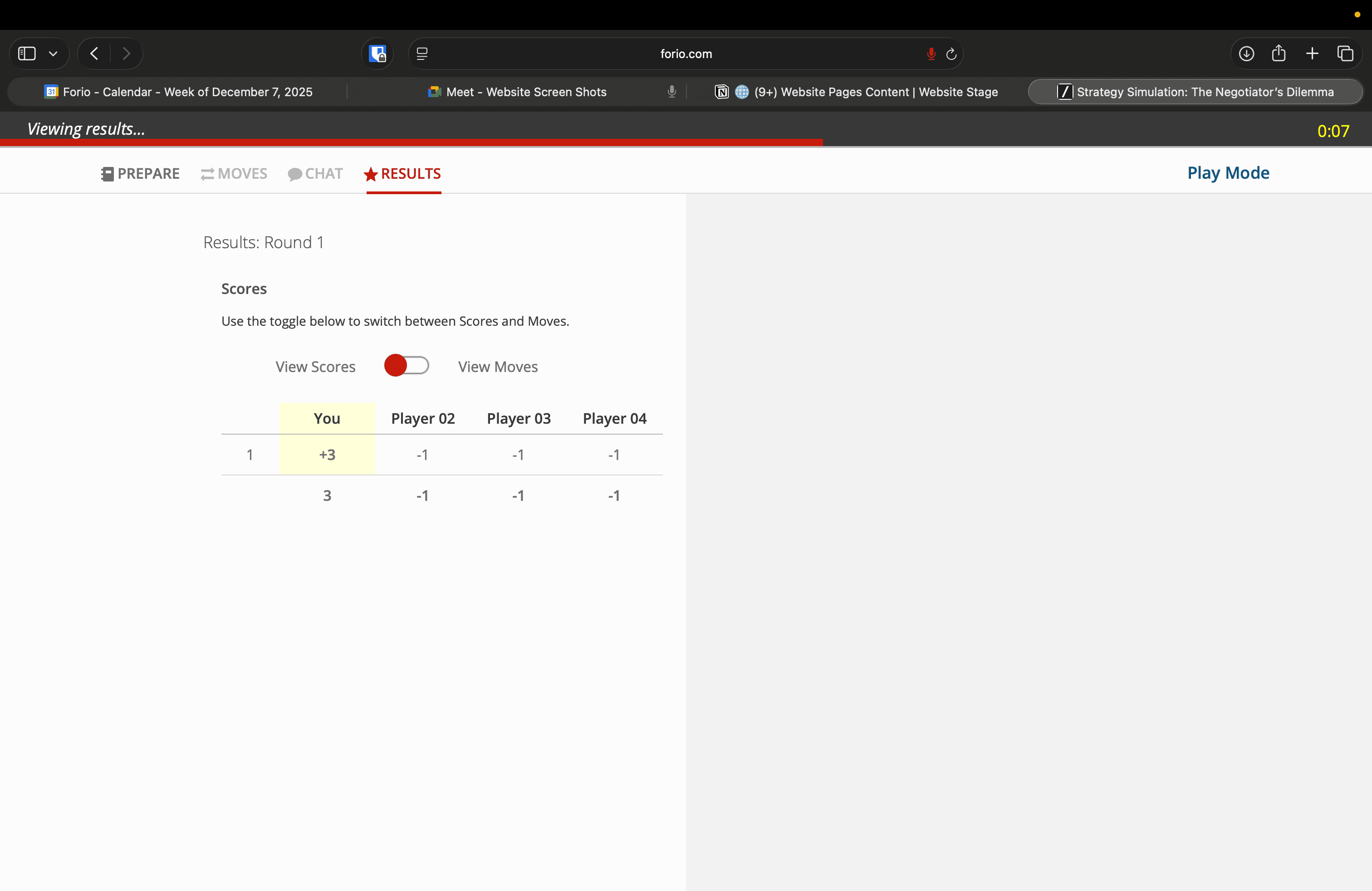
Imagine stepping into a world where every move you make—quiet, simple, just a click—signals a message to three other players. You don’t know their names. You don’t know their intentions. You can’t talk to them—at least not at first. All you know is that your goal is simple yet unforgiving: maximize your own score.
The simulation, at first glance, seems deceptively simple: choose to cooperate or compete each round. But beneath this surface lies a classic multi-round prisoner’s dilemma, where the tension between creating value and claiming value defines every interaction. Cooperation creates joint gain. Competition risks a destructive spiral.
When Play Mode begins, four people are thrown together in a fast-paced, timed, 10-round negotiation cycle. Scores shift instantly. Suspicion builds. The payoff matrix looms large on screen, reminding everyone how much there is to gain—and how quickly it can be lost.
Then come the bonus rounds, accompanied by a crucial twist: a live group chat window. Suddenly you can talk. You can try to form alliances, build trust, persuade others to cooperate—or quietly plan to betray them later for big points.
When results update, tensions flare. Did someone “accidentally” click the wrong button? Did they misread the agreement? Or were they deliberately saying something technically truthful but strategically deceptive?
Core Competencies
Negotiation and Tradeoffs
Decision Making Under Pressure
Conflict Resolution
Learning Objectives
Resources to Power Your Simulation
This simulation comes with a Facilitation Guide along with 1:1 facilitator training and free trial accounts.
Available with this simulation
Facilitation Guide

Free Trial & Demo
Check Out Similar Forio Sims
Negotiation
Power Plays and Tricky Tactics

Practice responding to power plays and tricky tactics in negotiation through interactive video scenarios, expert guidance, and self-assessment—building confidence and skill when dealing with difficult people.
Check It Out
Leadership and Teamwork
Tip of the Iceberg

A global collaboration simulation where participants act as multinational executives, navigating language barriers and working under time pressure to communicate and solve problems effectively.
Check It Out
Leadership and Teamwork
Everest

The best-selling Harvard Business Impact simulation where learners climb Mount Everest, balancing personal goals, health, and team success while managing limited information, time pressure, and leadership decisions that test collaboration and communication.
Check It Out