

MIT Sloan Project Management Simulator
Decisions Define Delivery. Will You Bring It In?
Simulation Overview
In the MIT Project Management Simulator, participants take on the role of project manager for a complex undertaking—be it a new consumer product, software development initiative, or construction project.
Each “week” in the simulation you make key decisions:
- How many people to staff in the design and build phases.
- Whether to accept late feature requests or reduce scope.
- How much to push the team versus maintaining quality and sustainable pace.
- Whether to increase concurrency or keep phases sequential.
The Project Management Simulator gives participants a safe environment in which to to experiment with decisions, observe unintended consequences, and learn about the dynamic complexity in projects.
Players

Single Player
Languages

English
Simulation Time

Total Time: 2.75 hours
Intro 15-30 minutes, Gameplay 45-75 minutes, Debrief 30-60 minutes
Accessibility

No Accessibility Compliance
Price

$168 per person
Simulation Categories

The Story
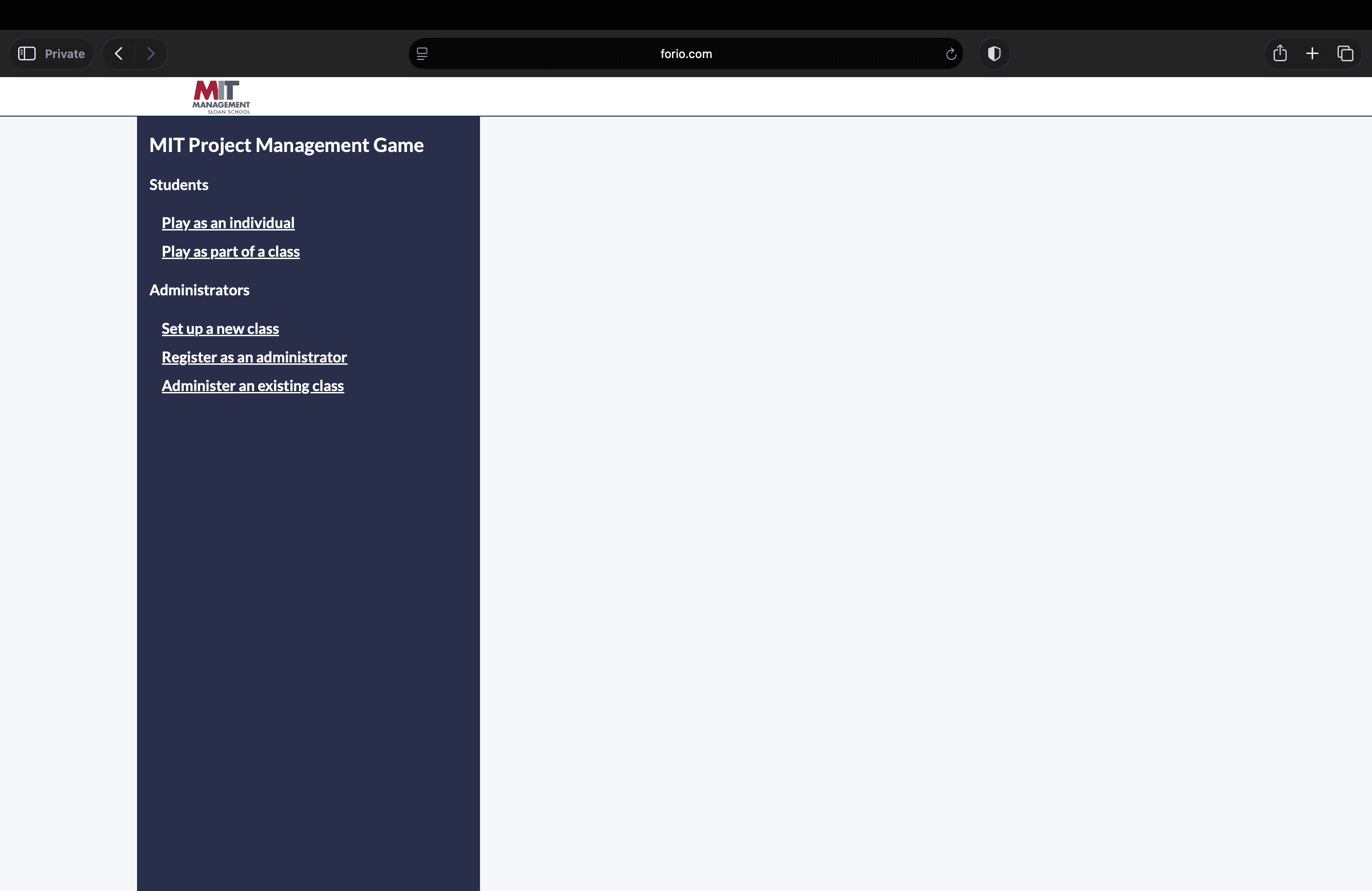
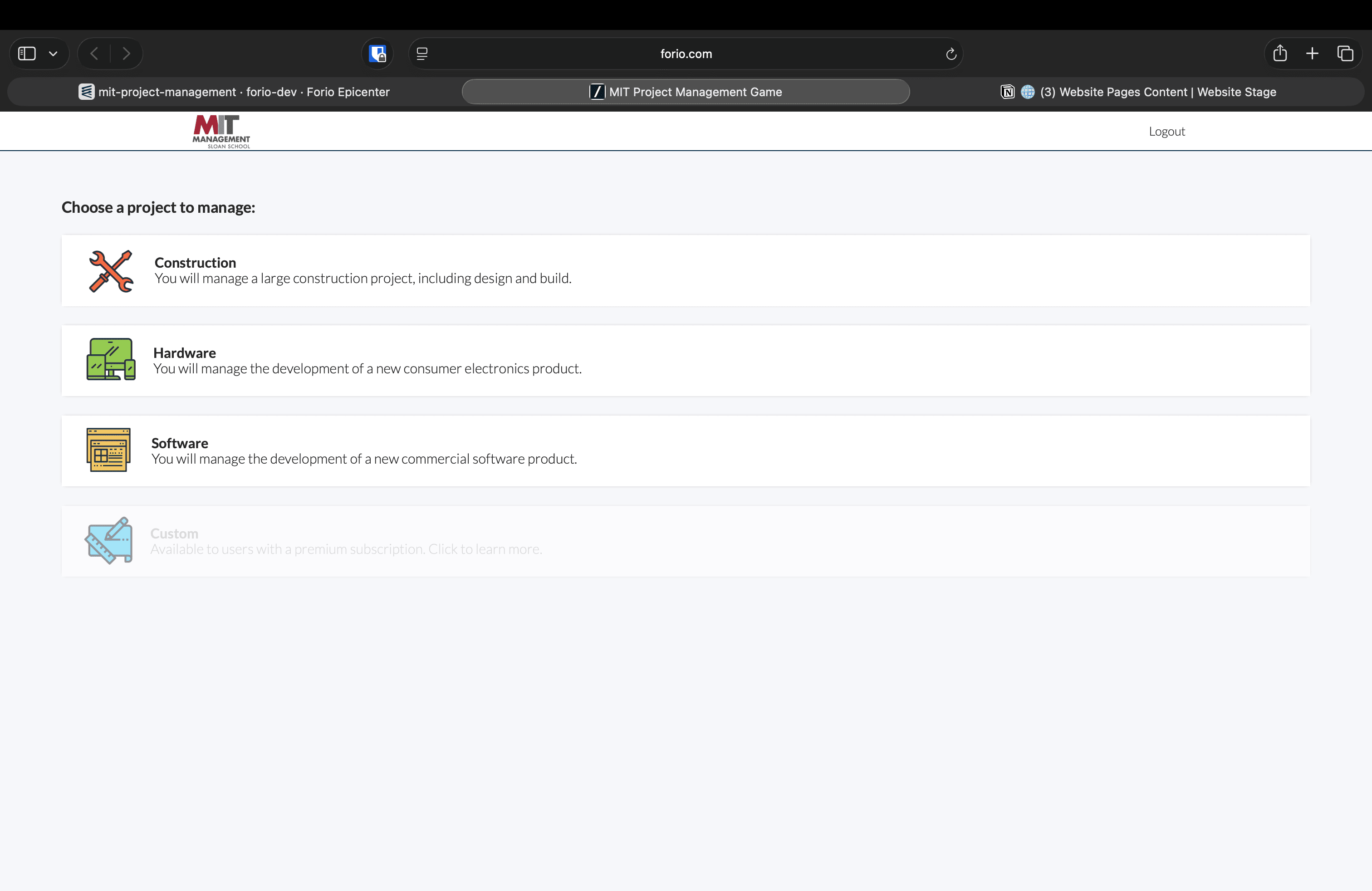
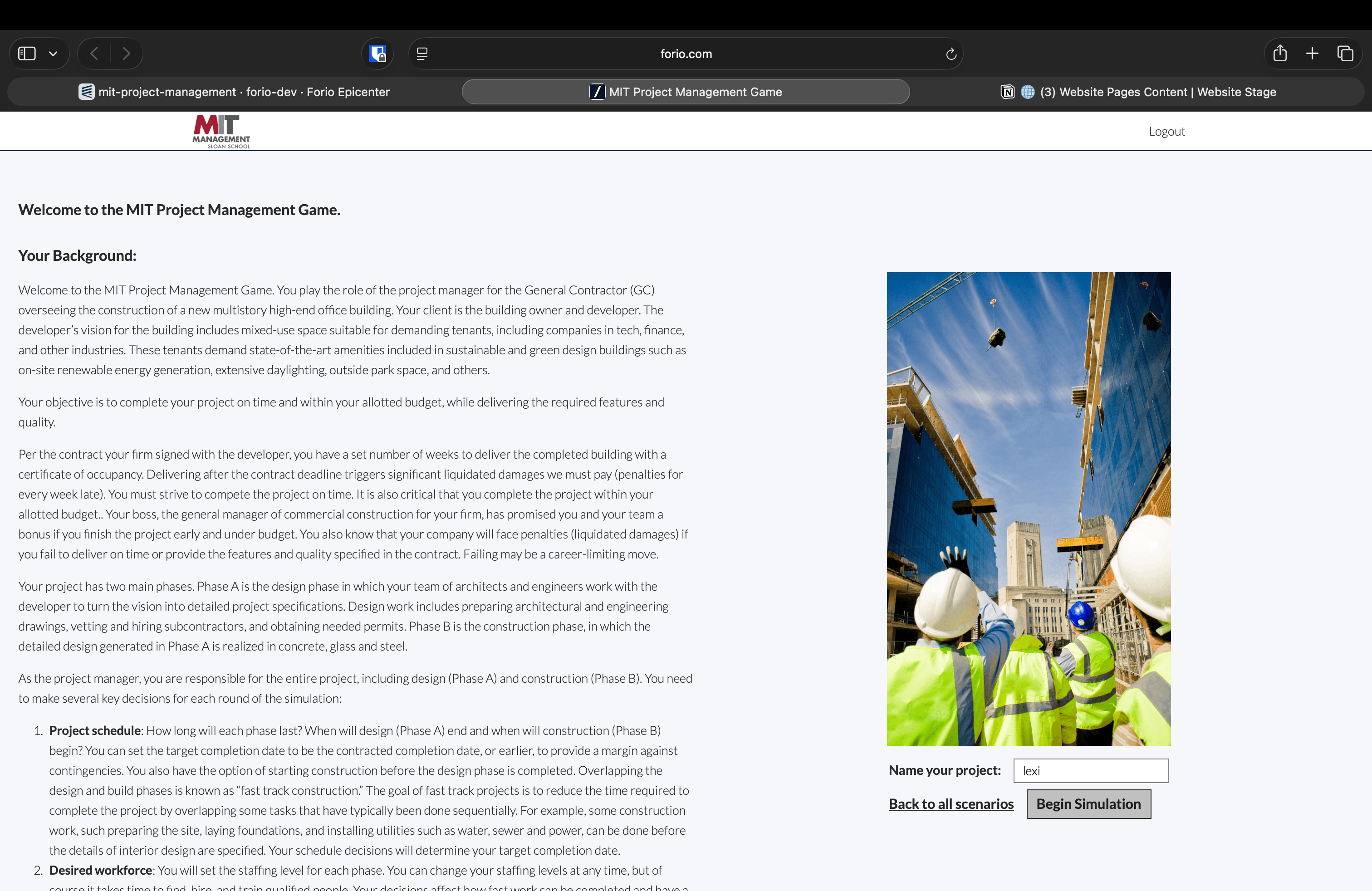
Imagine you are the lead project manager for “Project Phoenix,” a high-visibility initiative at your firm to launch a next-generation product. The executive team has committed: 48 weeks until launch, an initial scope of 24,000 design tasks and 96,000 build tasks.
- Week 1: You have a core team of experienced people. Everything looks good — schedule is tight but manageable.
- Week 6: Marketing sends in three new feature requests. You debate: should you accept scope creep or hold firm?
- Week 12: You are falling slightly behind. To catch up, you approve overtime, add more people, and allow design and build phases to overlap. At first progress jumps. But fatigue creeps in; rookie hires mean some tasks need rework; testing finds more defects than expected.
- Week 20: You get an email from QA: defect backlog is climbing. HR warns of rising attrition. Marketing pressures for more features. You must decide whether to cut scope or push harder.
- Week 30: The project is delayed. Costs are ballooning. You face the classic “90% done” trap — progress seems nearly complete, but then a wave of undiscovered defects and rework appears. You realize that your earlier decisions unleashed reinforcing feedbacks.
- Week 40: You must choose: continue pushing, accept scope reductions, or reset the schedule.
- Week 48: Launch day arrives. The market is ready — but you either deliver late, with fewer features, or with quality issues. Your decisions throughout the simulation determined the outcome: time, cost, scope, and quality.
In this simulation, you learn not just what decisions to make, but how they ripple through the system, how good-faith choices can backfire, and how systems-thinking is critical for project success.
Core Competencies
Systems Thinking
Innovative Strategy
Inclusive Leadership
Decision Making Under Pressure
Prioritization and Time Management
Adaptability
Learning Objectives
Resources to Power Your Simulation
This simulation comes with 1:1 facilitator training and free trial accounts.
Available with this simulation
Free Trial & Demo