HR Management Training Simulations
Build the analytical and strategic capabilities that define effective people leadership.
Build the analytical and strategic capabilities that define effective people leadership.
May 26, 2026

About HR Mangement Training Simulations
HR management training has long focused on the core mechanics of managing people within an organization: compliance, process, and policy. What has been slower to develop is the strategic side of the role: how HR decisions shape business outcomes, how people data informs better choices, and how the HR function moves from administrative support to organizational driver.
That gap is where HR management training simulations do their most important work.
By placing learners inside realistic workforce scenarios, simulations develop the strategic HR thinking that traditional training for human resource management rarely reaches. These participants experience the consequences of applying (or misapplying) HR frameworks in environments that reflect the complexity of real organizations. The skills can include:
- Managing staffing levels under pressure
- Navigating compensation trade-offs
- Responding to turnover and engagement challenges
The strategic work of HR is more than executing process against policy, and achieves more robust value when it connects people decisions to business performance. For instance:
- Using people analytics to identify which HR levers move performance
- Aligning workforce strategy to operational and financial goals under changing conditions
- Balancing staffing costs against engagement and retention in real time
- Navigating the people side of technology adoption, restructuring, and organizational change
Forio's HR management training simulations are built in partnership with institutions like Harvard Business Publishing, Stanford, and the Sim Institute. They have been used across corporate L&D programs, MBA curricula, and professional development initiatives to build the analytical and strategic capabilities that modern HR strategy increasingly demands.
Featured HR Management Simulation
Developed by the Sim Institute with Forio, the HR Management Simulation: People Analytics is well suited to HR directors, CHROs, and anyone in an HR analytics or people strategy role.
The simulation places participants in the role of HR Director at ConnectCall, a customer support center managing 500 agents, five million annual calls, and all of the anticipated complexity of a workforce under pressure. The mandate is straightforward: build a high-performing, motivated team while keeping operating costs under control. The execution is anything but.
During six simulated years, participants make decisions across staffing, compensation, training, benefits, and policy, with each choice rippling through employee engagement, customer satisfaction, and cost per call. Market shifts, technology disruptions, and talent shortages arrive without warning, requiring participants to be responsive to adapt strategy rather than optimize for a static environment.
Twelve years of historical workforce data are available throughout play, allowing participants to study patterns, identify correlations, and make decisions grounded in evidence rather than instinct. It's the analytical muscle that HR management training programs rarely develop.
The simulation runs in 90 minutes and is designed for individual learners, HR cohorts, and management teams developing people strategy capabilities.
HR Management Training Simulations
Forio's simulation catalog features human resources training for the decisions that define modern people strategy, like workforce planning, compensation design, engagement. These simulations also explore the organizational dynamics HR leaders navigate when business conditions shift. These HR simulations are built to scale across individual learners, cohorts, and enterprise programs without sacrificing the specificity that makes them so valuable.
Leadership and Teamwork
Leading Teams That Deliver
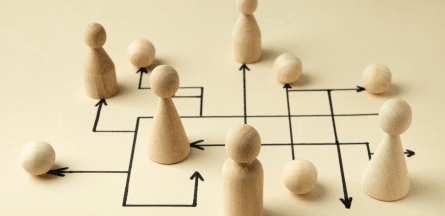
Lead with impact. In this simulation, learners guide a team toward high performance—setting clear goals, fostering trust, and inspiring collaboration to achieve meaningful results.
Check It Out
Project Management
Project Management Simulation

In this Project Management simulation from Harvard Business Impact, participants learn how to successfully complete a project initiative while managing cost, time, and realistic challenges that are often faced by project managers in a highly competitive industry.
Check It Out
Human Resource Management
People Analytics
The HR Management People Analytics simulation provides learners with the opportunity to take on the role of an HR Director with the goal of enhancing customer satisfaction while controlling costs.
Check It Out
Forio enables wonderful virtual learning environments for our globally distributed employees and we look forward to our continued partnership!
Cathy Huang, Delivery Hero
Benefits of HR Management Training Simulations
HR management training simulations address a persistent gap: most HR training develops knowledge of process, policy, and framework, but stops short of developing the judgment required to apply those skills when conditions are messy and trade-offs are real. Simulations close that gap.
Strategic HR thinking develops through application, not instruction. Workforce decisions like staffing, compensation, benefits, and policy carry immediate, visible consequences in a simulation. Participants see how their choices move engagement scores, turnover rates, and cost per output. That connection between HR strategy and business performance becomes concrete rather than theoretical.
People analytics becomes a practiced skill. Forio's HR simulations are built on expert research, system dynamics modeling, and real workforce data to create an environment that behaves like a real organization. Every choice has to be earned from the data: reading patterns, testing correlations, pressure-testing assumptions. That repetition is what builds the analytical habit learners take back to the real world; it’s not built simply from exposure to the concept.
High-stakes HR scenarios are rare in real organizations. Restructuring events, significant turnover spikes, compensation overhauls, and technology-driven workforce shifts don't happen frequently enough for most HR professionals to build reliable judgment from experience alone. Simulations create repeated exposure to those situations without organizational consequence so that they’re prepared when they face it.
Competing priorities become visible before they become operational problems. The same tensions that exist in real HR work show up in the simulation with full visibility. Participants learn to navigate issues like cost pressure against investment in people and short-term staffing against long-term talent strategy rather than face them while unprepared on the job.
Multiplayer formats develop cross-functional fluency. When HR, finance, and operations leaders run an HR management simulation together, each function's blind spots become visible in real time. That shared experience builds the awareness, empathy, and alignment that connects and strengthens teams. Didactic presentations can't do that.
How to Effectively Implement HR Management Training Simulations
The decision that most determines whether an HR management training simulation delivers isn't which simulation to choose — it's whether the learning objective is specific enough to make the debrief meaningful. A program building people strategy capability looks different from one focused on compliance leadership or workforce planning. The simulation should follow the objective, not the other way around.
Simulations work best as the applied layer of a broader program. Context and framing come first. The simulation is where participants step out of the material and into the scenario to make decisions under pressure, respond to market shifts, and manage competing workforce demands with incomplete information. Facilitation and structured debrief convert that experience into transferable capability.
HR management training simulations have been most effective in:
- Corporate L&D programs developing HR business partners and people operations leaders for more strategic roles
- MBA and executive education programs bridging HR management training courses and real-world application
- HR training for new managers preparing for expanded workforce responsibility
- People analytics initiatives building evidence-based decision making across HR teams
- Organizational change initiatives where HR leadership needs to build capability against a specific operational moment
Forio offers both Ready-Made simulations and fully custom builds. With either option, the variables that determine whether a simulation achieves its objective are the same: a defined learning goal, a facilitator who knows the material, and a debrief structured enough to extract insight from the data the simulation generates.
Train with HR Simulations Created by World-Renowned Faculty and Institutions